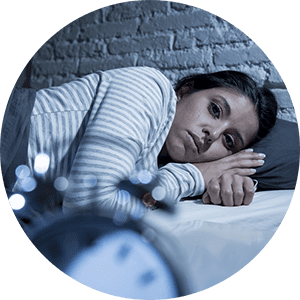
 You toss and turn for hours. You finally sigh and get out of bed. You have to be up early for work and really need some sleep. You flip on the kitchen light and pour yourself a generous glass of red wine. You pull pain pills or sleep aids from the medicine cabinet. Does this sounds familiar?
An estimated 30 percent of adults experience symptoms of insomnia at some point.
Sleep issues do more than leave you drowsy the next day. The Centers for Disease Control and Prevention[2] expresses concern that “Insufficient sleep is an important public health concern.” They link poor sleep to a broad range of health problems including high blood pressure, diabetes, obesity, depression and even cancer. Studies connect sleep issues to reduced productivity, shorter life spans, and lower quality of life. Sleep issues also affect others.
The National Highway Traffic Safety Administration[3] reveals that more than 1,500 people a year die in car accidents caused by drowsy driving. Another 40,000 people are seriously injured.
Health and safety aside, sleepless nights mean another kind of misery. Harvard Medical School[4] explains, “Sleep and mood are closely connected; poor or inadequate sleep can cause irritability and stress…Chronic insomnia may increase the risk of developing a mood disorder, such as anxiety or depression.” Too little sleep contributes to irritability and a short temper. You may find you are upset with yourself or easily snap at friends, family members, and even co-workers. When you’re tired, you’re just plain moody. This moodiness can indicate or become a serious mental health concern.
 Taking something at night to help you fall asleep and something during the day to help you feel alert may seem like a logical way to combat sleep issues. These substances may ultimately make sleep issues worse. Alcohol doesn’t help you sleep better; it prevents you from sleeping deeply and keeps you from progressing through all the normal phases of sleep. Alcohol withdrawal symptoms can also include insomnia that may trigger a return to drinking. Narcotic painkillers, sleeping pills and other depressants can lead to dependency and make it difficult for the body to fall asleep on its own. A few drags from a marijuana joint may seem like a harmless way to relax, but as with opioids and sleeping pills, the drug can interfere with your natural sleep cycle and cause you to wake up more frequently during the night.
After a sleepless night, it is a struggle just to stay awake and function. You may turn to caffeine or stronger stimulants to jumpstart your day or find focus and alertness. You then struggle to wind down at night. This creates a cycle of relying on one substance to fall asleep and another to stay awake. Short-term solutions create a vicious cycle. Many people come to struggle with co-occurring substance use and sleep issues. These issues feed one another until you take action. There are resources and options for recovery. Reach out to Michael’s House. Let us help you develop an appropriate plan for addressing unhealthy behaviors and sleep habits.
Michael’s House offers a sleep program that helps you develop healthy, regular sleeping patterns while simultaneously treating any related substance use concerns. We can give you back productive, enjoyable days and restful nights. Call today.
Written by: Tara Haelle
[1] https://www.ncbi.nlm.nih.gov/pmc/articles/PMC1978319/. “Insomnia: Definition, Prevalence, Etiology, and Consequences.” Journal of Clinical Sleep Medicine. 15 Aug 2007. Web. 11 Apr 2017.
[2] https://www.cdc.gov/features/dssleep/. “Insufficient Sleep Is a Public Health Problem.” Centers for Disease Control and Prevention. 3 Sep 2015. Web. 11 Apr 2017.
[3] https://one.nhtsa.gov/people/injury/drowsy_driving1/Drowsy.html#NCSDR/NHTSA. “Drowsy Driving and Automobile Crashes.” National Highway Traffic Safety Administration. Web. 11 Apr 2017.
[4] http://healthysleep.med.harvard.edu/need-sleep/whats-in-it-for-you/mood. “Sleep and Mood.” Harvard Medical School. 15 Dec 2008. Web. 11 Apr 2017.